Why an Integrated Waste Facility?
Dar es Salaam's waste crisis cannot be solved with a composting pilot or a new landfill. This page makes the case — with evidence — for why only a fully integrated system works.
Dar es Salaam Has a Waste Crisis. Not a Waste Challenge.
Every day, over 4,600 tonnes of municipal solid waste is generated across Dar es Salaam's five municipalities. Less than 40% is formally collected. What is collected largely ends up at Pugu Kinyamwezi — an open, unlined dumpsite that has operated beyond its design capacity for years.
The rest — more than 2,700 tonnes daily — is burned in backyards, dumped in drainage channels, tipped into the ocean, or left to decompose on roadsides. The consequences are not abstract. They are measured in blocked drains that flood neighbourhoods during rains, contaminated groundwater that families drink, methane fires at Pugu that burn for weeks, and child respiratory illness rates that track directly with air pollution from waste burning.
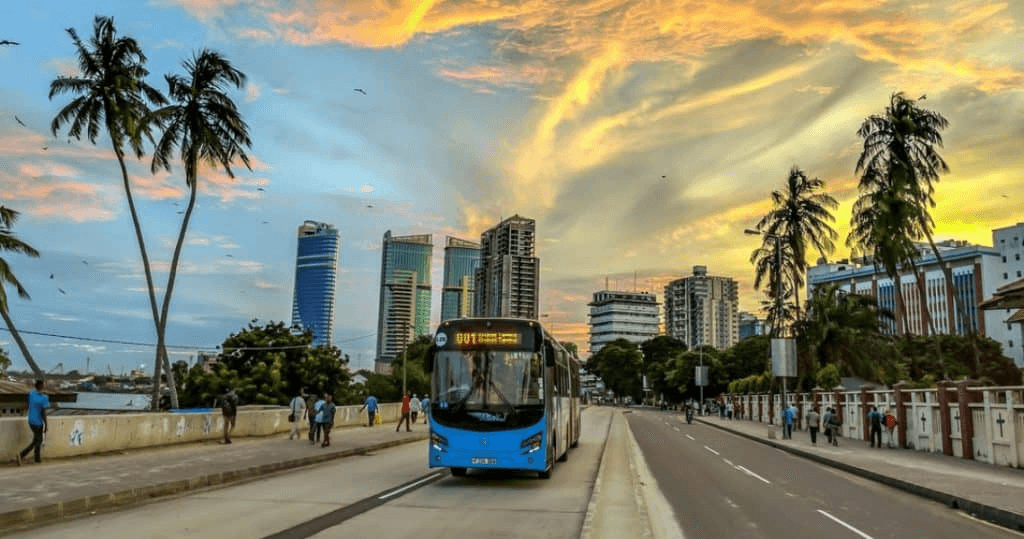
Dar es Salaam is one of Africa's fastest-growing cities. Its waste infrastructure has not kept pace. That gap is what Dar Eco Circular exists to close.
Every Single-Technology Approach Has Already Failed
These are not theoretical objections. Each approach has been tried in cities across Sub-Saharan Africa. Each has fallen short — not because of poor execution, but because of inherent structural limitations.
- Pugu Kinyamwezi is full. Any extension simply delays collapse by months, not years.
- Unlined dumps leach leachate into groundwater — contaminating drinking sources across Temeke and Ilala.
- Uncontrolled methane from decomposing organics accelerates climate change with zero energy recovery.
- No revenue is generated — government bears all costs permanently with no commercial return.
- Social resistance grows as communities near dumpsites suffer health impacts with no compensation.
- Requires >70% source separation — Dar es Salaam's mixed-waste collection cannot guarantee this at city scale.
- Addresses only the organic fraction — leaves 40%+ of waste (plastics, residuals, sludge) with no solution.
- Seasonal market for compost creates revenue volatility; no baseload commercial anchor.
- Cannot process faecal sludge, which represents a parallel public health crisis across the city.
- Has been tried across Sub-Saharan Africa repeatedly — almost none operate sustainably at scale.
- Recyclables represent at most 15–20% of Dar es Salaam's waste stream by weight.
- Market prices for recovered materials fluctuate sharply — plastics markets collapsed after China's 2018 import ban.
- Organic fraction (60%+ of waste) remains entirely unaddressed — still going to landfill.
- No energy output — no baseload revenue to fund collection subsidies in low-income wards.
- Cannot meet Tanzania's renewable energy targets or carbon credit thresholds independently.
- Incinerates recyclable and compostable materials that have higher economic value if recovered first.
- Without upstream MBT sorting, biogas and fertiliser revenue streams are entirely lost.
- Requires long-term waste supply certainty — impossible without the collection network already in place.
- Standalone WtE projects in Africa have struggled to reach financial close without diversified revenue.
- Misses carbon credits from methane avoidance, which require the ACoD component to generate.
Integration Turns Limitations into Strengths
Waste is not a homogeneous stream. It is a complex mixture of organics, plastics, metals, inerts, and faecal sludge — each fraction requiring a different treatment pathway. When those pathways are designed together, in a single system, something remarkable happens: every limitation of one technology becomes an input for another.
The IWF is not four technologies bolted together. It is one circular system in which each component depends on and enhances the others. Remove any single component and the economics of the rest deteriorate. Add them together and you have a self-reinforcing engine that gets stronger as it grows.
High-frequency, GPS-tracked collection ensures organic waste reaches the digester fresh — maximising biogas yield. Contamination alerts protect process quality. Without reliable collection, ACoD runs below capacity.
After organics are extracted for digestion, the MBT system produces high-calorific RDF from residuals. This RDF feeds the WtE plant, increasing its energy recovery efficiency and reducing fossil fuel dependency.
Waste heat from the WtE combustion process is recovered as steam and hot water for industrial tenants — eliminating the need for fossil-fuel boilers. Electricity from the WtE grid powers the entire park.
Digestate from the ACoD process is processed into 50,000 t/yr of organic fertiliser — sold to peri-urban farms, reducing chemical fertiliser imports and regenerating depleted soils around Dar es Salaam.
Revenue from energy sales and fertiliser allows the consortium to cross-subsidise waste collection in low-income wards where household ability-to-pay is limited — making universal coverage financially viable.
Legacy waste excavated from the over-full Pugu landfill is processed into RDF — progressively reclaiming the land. This creates a new revenue stream from a liability, while unlocking the site for future redevelopment.
"A standalone WtE plant cannot reach financial close without a waste supply guarantee. A standalone composting plant cannot survive without market certainty. Together, they fund each other — and fund the collection system that makes both possible."
— DEC Project Finance Team, 2025 Information Memorandum
What the Evidence from Other Cities Shows
Dar es Salaam does not need to experiment. The evidence from comparable cities — in Africa, Asia, and beyond — is conclusive.
From <10% collection to >85% within 10 years. City consistently ranked cleanest in Africa.
First utility-scale WtE in Sub-Saharan Africa. 185 GWh annually. Landfill fire eliminated.
Benchmark for Dar Eco Circular's WtE component. 2,250 t/day, 60 MW, zero landfill.
Struggled to reach financial sustainability — composting revenues insufficient for debt service.
Dar es Salaam's Moment
Dar es Salaam is at an inflection point. The city is growing at 5% per year. The middle class is expanding. Waste volumes are rising faster than any piecemeal intervention can address. The Pugu landfill is full. The political will to act is present. The PPP framework is in place. The technology is proven.
The question is no longer whether Dar es Salaam needs an integrated waste facility. The question is whether it will be built now — before the crisis deepens further — or in a decade, at far greater cost in health, environment, and lost economic opportunity.